
Examining the power centers in the US entails examining the ideologies behind them and there’s no greater ideological power than economics as it promotes and justifies capitalism.
Economics and economists are ultimately political but this truism gets ignored in the service to power. A new book by Branko Milanovic, called “Visions of Inequality”, shows why that is so. Milanovic asks “how can you construct a theory of economic activity that excludes the power embedded in relationships between the various actors on the stage you are directing? More to the point why would you? To ignore power is to ignore reality.”
What I’ve come to realize is that the reason you ignore power is because the powerful want you to.
It’s that simple.
Economics as a discipline developed to analyze capitalism and since the beginning ambitious economists have exploited this dynamic, producing reports and papers that justify the rapaciousness of the era’s feral elite. In order to eliminate power, and more importantly class, economics reduced its boundaries and focused only on matters that did not disturb its patrons. In the words of Milanovic:“With its main, or even sole, focus on price formation, it [neoclassical economics] leaves out class structure and the endowments of capital or skills with which individuals come to the market. Wealth acquisition takes place offstage … Thus, the mathematically complex models of general equilibrium were only very distant relations of real-world phenomena.”
Milanovic asserts that economics, as an intellectual field of study, did not follow a dispassionate course. It followed a path corrupted by the influx of money and support from business interests and the wealthy. Intellectual hegemony is a critical element that the wealthy employ to preserve their privilege. So we observe, according to Milanovic, that “inequality produces sufficient influence to dampen, if not eradicate, the study of that same inequality.” Thinking has been suppressed or channeled into benign and more comfortable topics. Economic departments and mainstream economists have obliged by largely avoiding some very sensitive subjects, including how economics relates to the American empire that our elite relay on to maintain their wealth and power.
The way in which the US economy is structured, with the fulsome support of neoliberal economists, has imperial ramifications. Just like domestically where the wealthy relies on parasitism and labor theft to keep its own luxurious standards afloat, as well as mediate the endless debt expansion and ever-ballooning inflation. To maintain the American empire they needed globalism to do this, as globalism allowed a form of Neo-empire that utilized economic methods as much as military ones to eliminate economic borders between countries and create a predatory pipeline enabling the “too big to fail” corporations and banks to keep themselves profitable by increasingly robbing the rest of the world via offshoring and other globalist techniques.
The use of the dollar as the worlds reserve currency and to decades of imperial economic policies like sanctions and anti-money-laundering rules and institutions such as the IMF and World Bank resulted in a systematic pattern of unbalanced exchange that funnel an oversized share of the world’s wealth into American hands. In the process the US transformed its own economy. The de-industrialization, off-shoring and financialization that accompanied our neoliberal empire was cheered on by American economists and political scientists, who celebrated the “end of history”, where neoliberal capitalism triumphed.
It’s all darkly comedic, especially since the term “dismal science” came into usage with early political/economy types, and most of them held Ricardo‘s deliberate opinion that a “substantial improvement in the condition of the mass of mankind was impossible.” And even though economists keep their disdain for the average citizen on the down-low and don’t talk about inequality doesn’t mean that Americans haven’t noticed how capitalists and their economic enablers have rigged the system to their benefit.
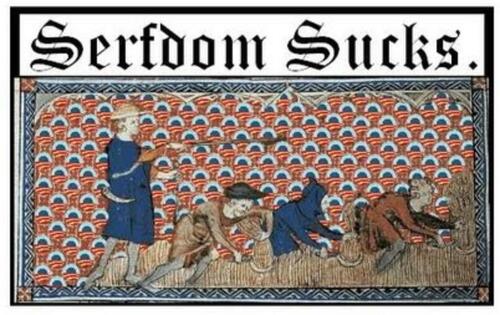
Right now, the gap between the wealthy and the rest of us is the greatest that it has ever been in the entire history of our nation. And Americans aren’t happy about it. The rich have been getting richer and the poor have been getting poorer, and this is causing all sorts of societal problems. Thanks to social media, the poor can see the incredible affluence that the wealthy are enjoying, and they are deeply envious.
Bloomberg tell us that anger is driving Americans attitudes towards economic outlooks. A deep-seated resentment about a “rigged” system has been simmering since long before the pandemic and continues to affect consumer attitudes….Why is the gap between attitudes and action so large? Much of the economic anger expressed in the polls may be less about current economic conditions and more about the economy the US has built over the past 40 years: one of high and rising inequality, with greater economic fragility due to higher income volatility and a reduced safety net. A deep-seated anger about how the economy is “rigged” has been simmering since long before the pandemic.
Of course it certainly doesn’t help that flaunting wealth has become one of the favorite pastimes of the 1%.
At this point the fact that economics and elite economists parrot the ideology of the wealthy should be taken for granted. We know full well that neoclassical theory has no relevance to life on earth. Re-connecting with reality implies such a radical reworking of the discipline that it is unlikely to take place unless topics such as inequality play a central part in the canon.
Don’t hold your breath.
Update:
Henry Kissinger dead at 100.
Finally.
Lots more next week.
 camelotkidd