
August is usually a slow month where people are on vacation but this year feels different.

The Guns of August, written by Barbara W. Tuchman, in 1962, is centered on the first month of World War I, where Tuchman describes in great detail the opening events of the conflict.
110 years later the world again stands on the edge of the precipice with multiple conflicts poised to draw larger powers into another world war that has the real possibility of going nuclear. And just like in 1914, everyone is sleepwalking into the coming conflagration.
In addition to the US and NATO”s provocative and dangerous proxy war against Russia in Ukraine, Israel’s assassination of Hamas’s leader, Ismail Haniyeh, has the Middle East is on the brink of regional war.
The largest instigator of violence is our Middle East attack-dog, who appears hell-bent on drawing the US into the maelstrom. Israel’s latest assassination spree, culminated with the murder of Hamas leader Ismail Haniyeh, their negotiator in Tehran, provoked a promised response that has the world on edge. Moreover, it is difficult to believe that Israel acted on its own to attack Iran’s sovereignty, which is tantamount to an act of war, without some sort of US approval. It is this ‘known unknown’ factor that makes the situation very dangerous. Iran’s supreme leader Ayatollah Khamenei has already ordered a direct strike on Israeli territory.
The Washington Post, citing Pentagon officials, has written that keeping in view a possible escalation, the US Navy has already concentrated 12 warships in the region. Among them is the aircraft carrier Theodore Roosevelt, which is located in the Persian Gulf with six destroyers. There are also five US warships in the Eastern Mediterranean. Prime Minister Netanyahu has said that Israel “faces difficult days” and is “ready for any scenario.”
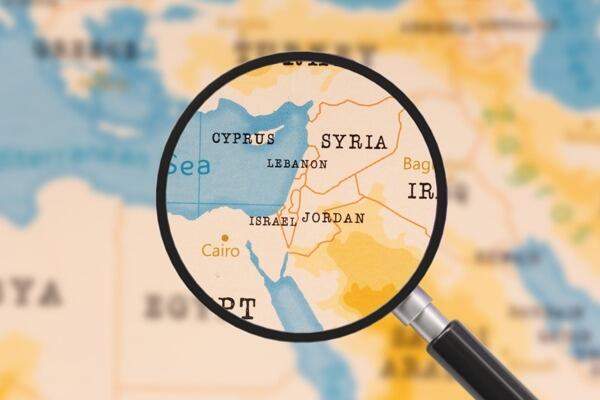
In the context of a possible World War 3, the US and NATO plus Israel represent the American Empire, and the Axis of Resistance plus Russia and China represents BRICS+. Or if you want–a unipolar world vs a multipolar one. If there is a regional war in the Middle East, it will undoubtedly be between these two groups.
Ironically, the Biden Administration’s embrace of Israel has pulled back the curtain of US public diplomacy. Since WWII Americans have been led to believe that they are the “good guys” but backstopping a genocide with 2000 lb. bombs is hardly the actions of a benevolent empire.
Maverick investigative journalist Robert Parry explained how it all worked in 2014 before his untimely passing. “This commitment to what the insiders called “perception management” began in earnest with the Reagan administration in the 1980s but it would come to be the accepted practice of all subsequent administrations, including the present one of President Barack Obama. In that sense, propaganda in pursuit of foreign policy goals would trump the democratic ideal of an informed electorate. The point would be not to honestly inform the American people about events around the world but to manage their perceptions by ramping up fear in some cases and defusing outrage in others depending on the U.S. government’s needs.
All of this is something to think about as we await a major joint military operation from Yemen, from Iraq, from Lebanon, from Iran, as a retaliation of the killing of Ismail Haniyeh.
Update: Earlier this week, Jared Cohen, President of Global Affairs and Co-Head of the Goldman Sachs Global Institute, noted in a conversation with another colleague, “We don’t know the timing of a potential Iranian retaliation, and it’s impossible to predict the scale with certainty. But a direct Iranian-led assault against Israel looks increasingly likely, and Israelis and their partners are preparing.”
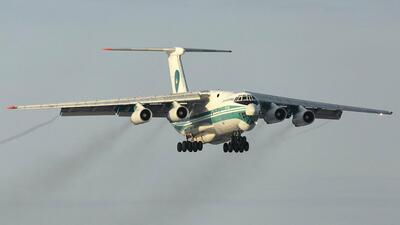
Update 2: Former CIA analyst Larry Johnson writes. “With respect to Israel and Iran, Russia may be playing a key role to potentially defuse the situation. During the past two-and-a-half years, Russia and Iran have forged a de facto military alliance…I think it is highly likely that Russia has provided Iran with a full complement of advanced air defense systems — most likely the S-400 — and the crews to operate those batteries.
Having Russian troops on the ground in Iran presents Tel Aviv and Washington with a tripwire they may not want to cross. The Russian air defense systems probably have been deployed around critical installations in Iran that are high on Israel’s target list. An attack on those sites, particularly one that involves nukes, would likely result in Russian casualties and be seen in Moscow as a casus belli. In other words, an Israeli preemptive strike on Iran would risk bringing Russia into the war on Iran’s side. Let’s hope Netanyahu is unwilling to test the limits of Russian patience.”
Buckle up.
 camelotkidd