
I had an epiphany watching the instructor for my continuing education class delineate all the expenses a small business incurs in the course of operation. It occurred to me that the US tax base has been shifted from corporations, banks and wealthy estates down to small businesses and workers. Furthermore, by transferring the costs from corporations and the wealthy to small businesses and workers, the right furthered it’s long running project of demonizing government, taxation and society. Indeed, for a contractor and small business owner, government appears expensive, overbearing and even tyrannical, all things the right accuses it of being.

Saving, investing and retirement offer other avenues for mischief. For decades corporations have been shedding pensions and offering 401 K plans in their stead, locking workers into a Faustian bargain with Wall Street. Since the 1970s, employers in the US largely shifted away from providing defined-benefit pension plans to offering defined-contribution plans, whose benefits are contingent on worker contributions and the rate of return. Traditional saving accounts have taken it in the neck since 2008 when the Fed slashed the interest rate to zero, in the process herding millions more Americans into the stock market. Once again the political effects have been pronounced. Instead of allowing for a healthy pushback to the ruinous corporate policies, Americans are financially dependent on the the corporate rogues gallery because our wealth, health and retirement are all tied to the stock market.
What should be the dominant political story is that industrial capitalism has given way to monopoly finance capitalism in the pursuit of shareholder value. The US moved from an industrial-focused capitalism to one where financial markets become central to wealth creation and distribution, leading to asset appreciation capitalism where value is increasingly generated and accumulated through the rising value of assets, such as land and financial instruments, rather than through production of goods. This sounds hyperbolic but it needs to be said a lot more often. The wealthy staged a massive heist and made off with $50 trillion, while amplifying the anti-government movement, and tamping down the populist sentiment for neutering corporations and their wealthy owners.
Most of us do not realize that we are in a constant battle with billionaires over who pays the costs and who gets the benefits from an economy. The wealth growth of the owner class far outpaces the income growth of workers, even highly skilled and highly paid professionals. The end result is an extreme concentration (or monopoly) of wealth and power as well as extreme inequality. Back in 2006 Warren Buffett told the NY Times that the rich had leveraged their wealth and power to secure a favorable tax code: “There’s class warfare, all right, but it’s my class, the rich class, that’s making war, and we’re winning.”

If the voluminous literature on comparative social policy has taught us anything, it is that the US government’s avoidance of universalism and de-commodification, as well its preference for means-tested programs, low-profile tax credits, and indirect delivery of universal benefits, has tended to amplify the passive, anti-political character of American voters, even as in recent decades, public opinion has trended socialist, with broad swaths of the population supporting policies ranging from universal health insurance to universal pre-kindergarten programs. Nevertheless, “liberalism”, as practiced by the professional/managerial/class who control the Democratic Party, has become increasingly associated with paternalistic tone-policing “Karens” and technocratic or neoliberal policies that fail to deliver on promises of shared prosperity.
The result is in plain sight – the US economy is increasingly a rentier economy, beset with inflation, with the associated costs borne by workers, small businesses and consumers.
Why do you think a real estate grifter and game-show-host like Trump was able to get within shouting distance to the White House? John Michael Greer sums it up: “What the Democrats are refusing to deal with is that a substantial majority of Americans are bitterly unhappy with the results of what, until Trump’s rise, was a bipartisan policy consensus in American public life. They’re not flocking to Trump for no reason at all. They’re flocking to him because he’s the only figure in the political scene offering them an alternative to a state of affairs they find intolerable.”
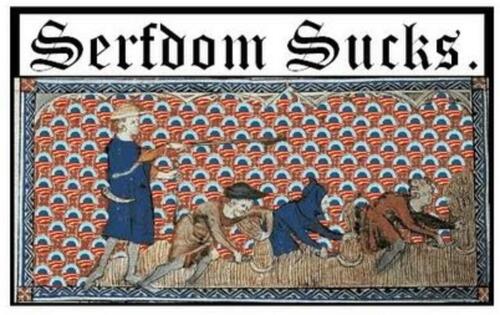
Where the tax burden falls should be the overriding issue in US politics. The fact that we’re all brainwashed to believe the neoliberal economic fairy tales, should be next.
The way in which we create and spend money is political. The billionaires have convinced us that there is never any money for good things, only for bailing out Wall Street and war.
Update: History doesn’t repeat but sometimes it rhymes. John Maynard Keynes wrote this in the aftermath of the 1929 Wall Street Crash–“When the capital development of a country becomes a by-product of the activities of a casino, the job is likely to be ill-done. “
 camelotkidd