
We have a tollbooth economy, where necessary components of modern life–education, healthcare, transportation and communication–have become prohibitively expensive, in the process erecting barriers to economic participation.
A major feature of the tollbooth economy is the increasing weight of rentier activities and how they drain income from workers and more productive sectors. The end result is a sort of neo-feudalism, created by privatizing and financializing transportation, education, health care, prisons and policing, the post office and communications, and other sectors that formerly were kept in the public domain of American economies so as to keep their costs low and minimize their cost structure. The result is a high-cost economy, where US workers are uncompetitive.
40 years of neoliberal “reforms,” have slashed or privatized essential governmental functions including vital infrastructure installation, implementation and maintenance. And now the Trump’s Department of Government Efficiency (D.O.G.E.), wants to eliminate or further privatize infrastructure, even as they proclaim that they want to cut government “waste”.
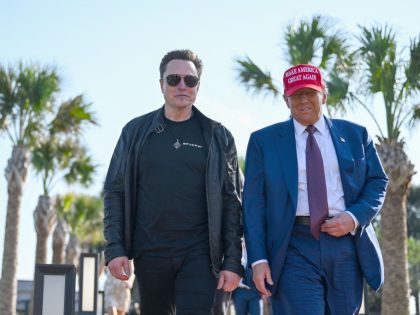
The effort to cut “government waste” has a long, bipartisan, history. It was Democrat Bill Clinton who last balanced the budget, a feat that was rapidly followed by a deep and lasting recession. And Joe Biden dedicated his career to cutting Social Security, Medicare and Veteran’s benefits. And, who doesn’t want to cut government waste? Many Americans likely share the view that much of what the Federal government does shouldn’t be done. For instance, why are the FBI and CIA interfering in US elections? Why is the US funding and arming Israel and Ukraine, while meddling in dozens of countries worldwide? Why is the Federal government militarizing the police by producing military ‘surplus’ to supply them with? And why is oligarchy the only choice on the ballot?
It might surprise you to find out that none of the before mentioned governmental expenditures are on DOGE’s cut lists, but the furor over “waste” points to a larger issue. What’s been lost is the awareness that every economy is planned, with the salient political issue being who gets to do the planning. The recent dominance of financial capital over industrial capital was not an accident, and it’s operating system–neoliberalism–minimized state intervention in the economy, and has led to a situation where government influence is overridden by corporate donors and financial interests, not to mention the military/industrial/complex (MIC), sidelining public welfare.
What’s frustrating is that the history of US economic development has been lost or falsified in a deliberate un-learning. In the early 20th Century, economist Simon Patten demonstrated the importance of government expenditures on basic infrastructure to create a low cost economic environment, while proclaiming that infrastructure is the forth means of production, after labor, capital and land. Patten, who led the Wharton School during the Progressive Era, was a pioneer of the economics of abundance, and a theorist of the second industrial revolution, and intellectual godfather of the New Deal. Patten believed that to have a true free market the state needs to subsidize infrastructure to keep costs down, rather than having powerful monopolies enacting tollbooths at critical chokepoints. While Patten said that public infrastructure is the fourth factor of production, its role isn’t to make a profit. It’s to lower the cost of public services and basic inputs to lower the cost of living and lower the cost of doing business to make the economy more competitive.
The decades of elimination and privatization of government infrastructure, justified as “deregulation”, has been accompanied by a tsunami of corporate media propaganda, cheerleading the destruction. Our soi-disant elite never wanted voters thinking too deeply about politics, especially the populist kinds of politics, whether of the left or right, that risked disturbing the metastasizing corruption and the forever wars from which they profit so handsomely.

Partisan political frames detract from understanding the American political economy. The current Republican conceit that Elon Musk is a radical here to “move fast and break things” misses that every president over the last five decades has made a similar pitch. And while economic predictions are notoriously difficult to get right, this is a guarantee: should DOGE get up and running, the rich will be made richer and the rest of us poorer. This isn’t only because Trump and Musk are evil or singularly self-interested. It will because this is how the American economy has been set up to operate.
To point to a recent example, the debate over H-1B visa’s elides the real reason that the US is uncompetitive with China. By focusing on so-called American-worker mediocrity, our elite and their corporate media sycophants conceal the tollbooth economy reality that precludes any real competition with China, which is simply following the same path as the US in their development by funding infrastructure.
Here’s a thought experiment dear reader: see if you can recognize the “tollbooths at critical chokepoints” in your life.
 camelotkidd