
The question has come to the forefront now that Wall Street and big tech firms are inflating a massive AI bubble in the hopes that it will somehow work out, but if it doesn’t, well the government will backstop them.

As the reality of lost investments sinks in it’s notable that AI advocates are promoting a plan for the US government to back stop “artificial intelligence”, because “national security”, (of course), where they invoke the scary Chinese threat as a way to justify it. New York University professor, Gary Marcus has been saying it for a while what the end game would be. “The countdown until we are told that LLMs are “too big to fail” starts now. “We can’t afford to lose to China”, they will say, accepting their multibillion dollar bailouts.”
Wednesday OpenAI CEO Sam Altman went on the Conversations with Tyler podcast and openly called for a government backstop: “ When something gets sufficiently huge … the federal government is kind of the insurer of last resort, as we’ve seen in various financial crises … given the magnitude of what I expect AI’s economic impact to look like, I do think the government ends up as the insurer of last resort.”
That same day, OpenAI’s CFO Sarah Friar echoed the same message at a Wall Street Journal technology conference. “The company hopes the federal government might backstop the financing of future data-center deals.”
Thursday, Nvidia CEO Jensen Huang said AI companies are crucial for American national security, telling the Financial Times that “China is going to win the AI race.”
What’s infuriating is that the AI evangelists blame Chinese subsidies for their predicament but China has a much different economic model, where the Chinese government and average citizens gain the benefits from the subsidies while in the US, the government and we the people pay the costs while the billionaires make off with the loot. I know it’s the wayback machine but didn’t the US subsidize its too-big-to-fail banks with trillion-dollar bailout while turfing millions of Americans out of their homes recently?

Of course, the plea for federal largesse should be understood as another bailout of Wall Street and private equity who have massive investments at stake. Firms like BlackRock and Blackstone have invested nearly $200 billion in data center–related deals since 2022, driving a wave of acquisitions across gas-fired power plants, fossil fuel assets, and even retail energy utilities that millions of customers depend on.
Like I said last week, the crisis is that U.S. financial system requires enormous amounts of new collateral, as in, natural resources like oil, natural gas, water, etc. to underwrite the over-leveraged U.S. shadow banking system. A lot of the over-leveraging comes from investments in AI. An AI crash would take down not only the market but about 20% of GDP growth (which is roughly what datacenter construction accounts for these days)
Yikes!
The bailout will probably happen because that’s how our political system works anymore. Since the 1980s, America has done national economic development through financial bubbles, which is to say, by allowing Wall Street rather than democratic institutions to organize where we allocate capital. The result is that rich people, also known as donors, must never lose money. It’s socialism for them and the savageries of neoliberalism for us.
There’s a pattern to recognize. AI, like the military industrial complex (MIC), funnels all of the profits to the wealthy while producing inferior products that produce mediocre results. Silicon Valley has embraced the same business strategy of cost-plus as the MIC. Soon, OpenAI could join the likes of Lockheed/Martin, Boeing, Raytheon and all the rest feeding at the trough in the name of national security.
Lets go back to those subsidies. Compare OpenAI to what Chinese AI creator DeepSeek did, build a very similar model for a fraction of the cost that doesn’t require massive amounts of energy. Maybe, just maybe, having an industrial policy that grows an economy plus one that benefits the populace is a good thing?

Crazy talk, I know.
Instead, here in the homeland the AI bubble is US industrial policy. Political/economy writer with a anti-trust beat, Matt Stoller, writes: “But whether generative AI is useful is besides the point. AI data center build outs are now American industrial policy. Five big tech monopolies have grabbed an increasing share of profits in the economy, and they are engaged in a form of central planning to force investment in bloated construction projects. Wall Street is following along with capital, and firms like McKinsey and corporate influencers are forcing every corporation to impose, top-down, AI on everyone, whether it makes sense or not.”
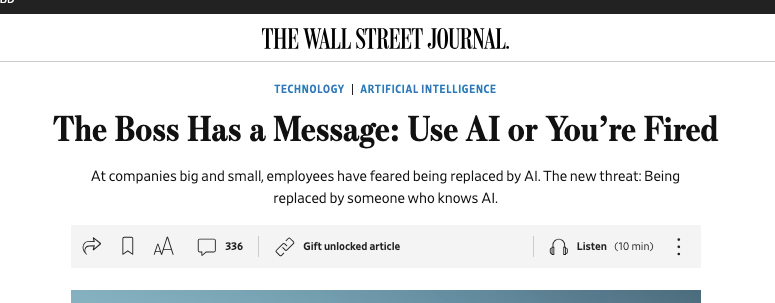
But look out. Another bailout of rich-fucks would not sit well with Americans who are already saddled with enormous debt and suffering from an ongoing recession. Especially a bailout of AI, whose purpose is to replace millions of jobs and stick Americans with outrageous power bills.
Indeed, the politics are moving strongly against the latest bubble. Even as Trump tries to explain how good AI is going to be for America, various big business leaders are explaining to their investors how AI is going to allow them to get rid of workers and raise returns on capital. The inconsistencies at the heart of these stories are obvious, and apparent to everyone.
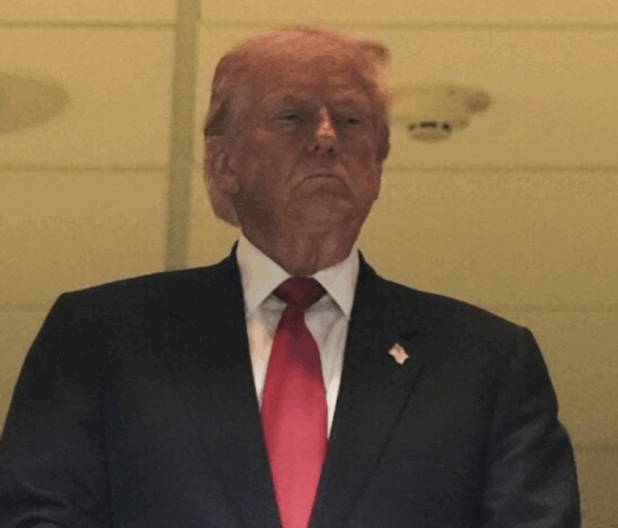
The latest elections demonstrated that there’s massive anger at AI buildouts. Indeed, almost every week, “from Tucson, Arizona, to the the D.C. area, Americans are protesting, rejecting, restricting, or banning new data center development. Candidates won office entirely on rejecting data centers.
Whether these candidates can put together a coherent critique of the AI data center build out strategy, and propose an actual alternative will be a key political story going into the 2026 elections.
 camelotkidd